Strategic Sylhet-3 · Healthcare Reform

Building a Fair and Safe Health System for Sylhet-3

Sylhet-3 – covering Dakshin Surma, Fenchuganj and Balaganj – has a population of more than 500,000 people, most of whom live in rural villages. Nearly 145,000 are children aged 0–14 and over 25,000 are elderly, yet the area is served by health facilities that are under-resourced, under-staffed and often difficult to reach. As a result, illnesses that should be easily treatable become dangerous, and preventable deaths continue year after year.

Across Bangladesh, the picture is similar. More than 100,000 children under five die annually, with nearly two-thirds passing away within the first 28 days of life. The country also records over 63,000 stillbirths each year, which is around one in every 41 births. The maternal mortality ratio remains close to 115 deaths per 100,000 live births. These national figures are not distant statistics for Sylhet-3; they reflect real families who reach Sylhet MAG Osmani Medical College Hospital too late because proper care was not available locally when they needed it.

The main problems driving this crisis are clear. Upazila Health Complexes in Sylhet-3 do not have the capacity to provide full emergency, surgical and maternity services for half a million residents. There are major shortages of doctors, nurses, midwives and lab technologists, leaving essential equipment unused. Many women still give birth at home without skilled support. Environmental risks such as flooding and contaminated groundwater create recurring health threats. Meanwhile, families are pushed into expensive private treatment because public services cannot meet demand. In Bangladesh, about 67% of all health spending comes directly from people’s pockets, and rural households in Sylhet-3 feel this burden the most.

For these reasons, a comprehensive healthcare reform is urgently needed. Expanding Upazila hospitals, establishing 24/7 Union-level health complexes, deploying skilled staff and reducing out-of-pocket costs are essential steps. Without this reform, Sylhet-3’s growing population will remain vulnerable to avoidable illness, suffering and loss.

What This Proposal Delivers

  • A clear and honest assessment of the current healthcare crisis in Bangladesh and Sylhet-3.
  • Population and demographic profile to understand who is most at risk.
  • Evidence-based facts on child deaths, stillbirths, maternal mortality and health spending.
  • A detailed reform plan to strengthen Upazila hospitals and build 24/7 Union-level services.
  • Realistic, step-by-step actions showing how these reforms can be implemented effectively.
Save Lives & Stop Preventable Deaths
Upgrade & Expand Upazila Hospitals
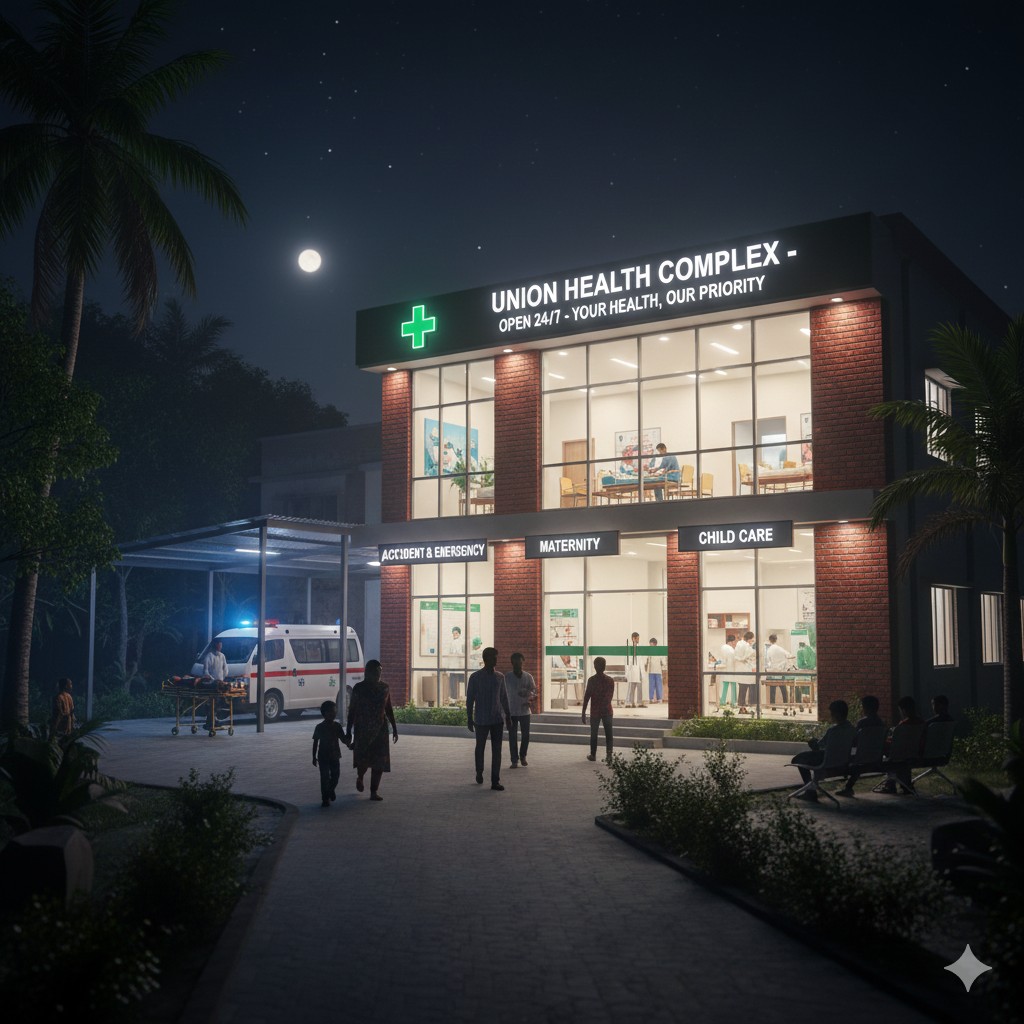
24/7 Union-Level Emergency & Maternity Care

This is a working blueprint, designed to be discussed with doctors, health officials, local leaders and, most importantly, ordinary citizens.

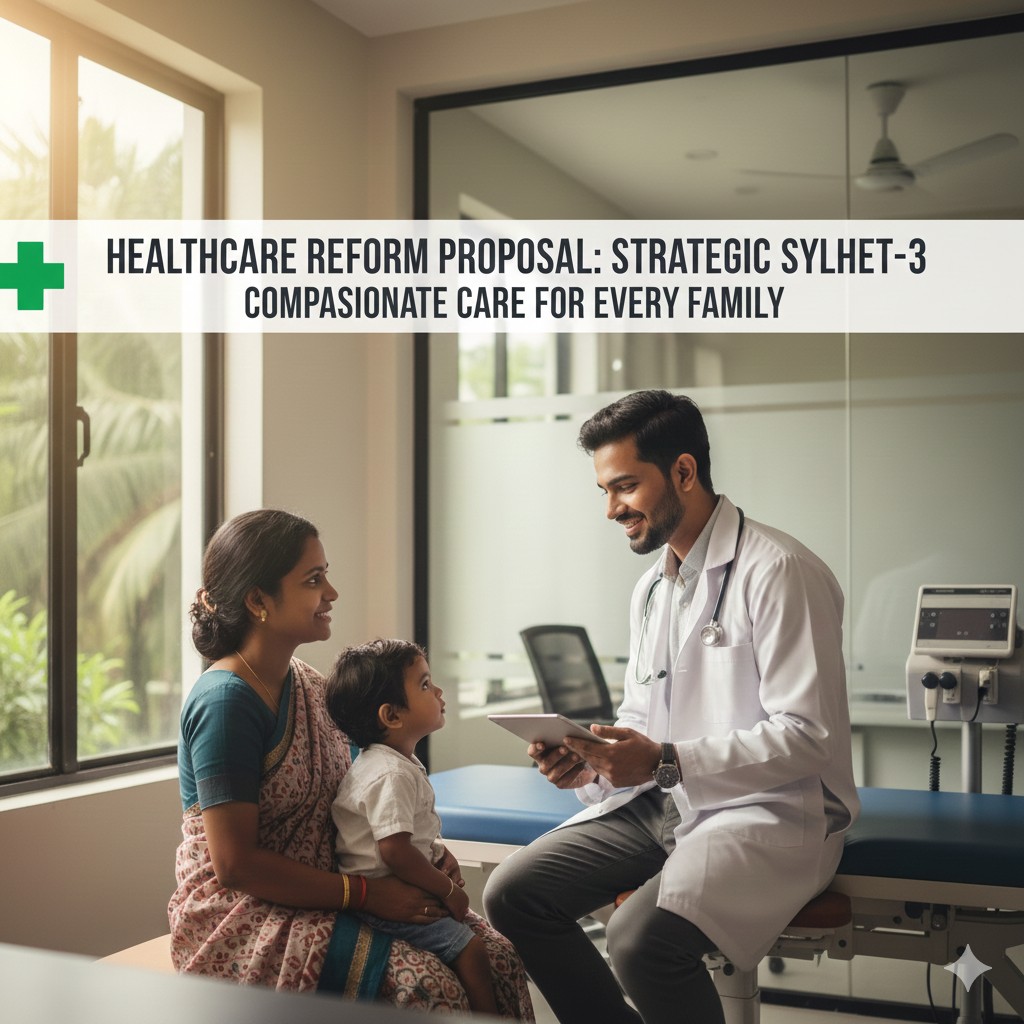
Healthcare reform

1. The National Healthcare Crisis in Bangladesh

Bangladesh has made real progress in health, but behind every number there is a family, a village, and a story of a life cut short. To understand Sylhet-3, we must first see the bigger national picture.

1.1 Child Deaths

In recent years, more than 100,000 children under five have died annually in Bangladesh. That is roughly one child lost every five minutes. Nearly two-thirds of these deaths happen in the first 28 days of life, when quick access to care makes the biggest difference.

1.2 Stillbirths

Every year, Bangladesh records over 63,000 stillbirths, which means 1 in every 41 births ends with a baby born without signs of life – the highest rate in South Asia. Many of these losses are linked to delayed or poor-quality care.

1.3 Maternal Deaths

The maternal mortality rate has improved, but it is still around 115 women dying for every 100,000 births. These are mostly women in their 20s and 30s – young mothers who should have had their whole lives ahead of them.

1.4 Distance and Death

Studies show that when health centres are far away, the risk of a baby dying can rise by around 15–20% for every extra kilometre the family must travel. In rural areas like Sylhet-3, distance is not just an inconvenience – it is a matter of life and death.

1.5 Out-of-Pocket Costs

Around two-thirds (about 67%) of all health spending in Bangladesh comes directly from families’ own pockets. A single serious illness or emergency can force people to sell assets or take high-interest loans.

1.6 Government Underinvestment

Government health spending is still low compared to the need. This leaves public facilities under-staffed and under-equipped, and pushes more people towards private care they cannot afford.

2. Sylhet-3 at a Glance: Population & Demographics

Sylhet-3 is home to just over half a million people. Most live in rural areas, many are children, and there is a growing elderly population – all depending on a health system that is not yet built for their needs.

Total Population (2022)

500,432 people across three Upazilas: Dakshin Surma, Fenchuganj and Balaganj.

Age Breakdown (2022)

Children (0–14): 144,823
Working age (15–64): 330,050
Elderly (65+): 25,548

Urban vs Rural (2022)

Urban: 38,967 people
Rural: 461,465 people
Most of Sylhet-3 lives in villages, not towns.

Dakshin Surma

Area: 187.66 km²
Population: 262,787
Males: 128,763 · Females: 134,020

Age 0–14: 73,434
Age 15–64: 175,941
Age 65+: 13,408

Urban: 15,366 · Rural: 247,421

Fenchuganj

Area: 114.09 km²
Population: 114,293
Males: 54,130 · Females: 60,156

Age 0–14: 35,173
Age 15–64: 73,341
Age 65+: 5,772

Urban: 21,589 · Rural: 92,704

Balaganj

Area: 151.21 km²
Population: 123,352
Males: 59,259 · Females: 64,093

Age 0–14: 36,216
Age 15–64: 80,768
Age 65+: 6,368

Urban: 2,012 · Rural: 121,340

These numbers matter. It means almost 145,000 children and more than 25,000 elderly people in Sylhet-3 depend on local health services. With over 460,000 people living in rural areas, distance, transport and facility quality become life-or-death issues.

3. Specific Healthcare Problems in Sylhet-3

Sylhet-3 reflects national problems in a concentrated way. The combination of a large rural population, many children and elderly people, and weak facilities means that our area carries a heavy share of preventable deaths.

3.1 Weak Upazila Health Complexes

UHCs in Fenchuganj, Dakshin Surma and Balaganj cannot currently provide full emergency, surgical and maternity care for the 500,000+ people they serve. Patients often bypass them and go straight to Sylhet MAG Osmani Medical College Hospital (SOMCH), arriving late and in worse condition.

3.2 No Specialist Care Near Home

There are not enough surgeons, gynecologists, pediatricians or anesthetists in Sylhet-3. Complicated deliveries, strokes and heart attacks often cannot be handled locally, leading to dangerous delays for children, working adults and the 25,000+ elderly residents.

3.3 Maternal & Newborn Risk

Many women in rural Sylhet still give birth at home. When there are complications, they are referred late to SOMCH, feeding into the very high C-section rate (over half of births there) and increasing the risk of death for mothers and babies from Sylhet-3.

3.4 Human Resource Shortages

Key posts are vacant; labs lack technologists; X-ray and diagnostic machines sit unused. For a population of half a million people, the number of trained staff is far too low. Without them, buildings and machines cannot save lives.

3.5 Environmental and Climate Pressures

Areas like Balaganj face arsenic and iron in groundwater. Floods damage infrastructure and cut off roads, isolating villages. Water-borne diseases such as diarrhea spread quickly, but facilities are not fully prepared for these recurring crises.

3.6 High Cost for Poor Families

When public services fail, families turn to private clinics and pharmacies, often on credit. For many of the 461,000 rural residents of Sylhet-3, healthcare has become a major financial burden and a cause of long-term poverty.

4. From Crisis to Reform: Matching Problems with Solutions

The table below shows how each major problem in Sylhet-3 is paired with a concrete proposal. The following sections then explain each pillar in more detail and describe how it can realistically be delivered.

Current Problem

Weak Upazila Hospitals

UHCs cannot handle complex cases or large patient numbers. People bypass them and go straight to Sylhet city, arriving late and overloading SOMCH.

Our Proposal

Upgrade each UHC towards a 100–200 bed hospital with fully functional emergency, surgery, maternity and diagnostic services, reducing unnecessary referrals.

Healthcare Reform
Current Problem

No Union-Level 24/7 Care

Villagers often have no doctor or midwife nearby at night. Emergencies and deliveries are delayed, increasing the risk of death or disability.

Our Proposal

Build and staff Union Health Complexes with at least one doctor and two midwives per union, open 24/7 for childbirth and emergencies.

Healthcare Reform
Current Problem

Staff Shortages & Neglect

Posts remain vacant, staff feel unsupported and patients often feel disrespected and ignored.

Our Proposal

Recruit and fairly deploy staff, offer rural incentives, provide ongoing training, and enforce clear standards for respectful, timely care.

Healthcare Reform

5. Detailed Healthcare Reform Proposal for Sylhet-3

The reform is built around five main pillars. Each pillar explains: (a) what is wrong now, (b) what we propose, and (c) how it can realistically be done.

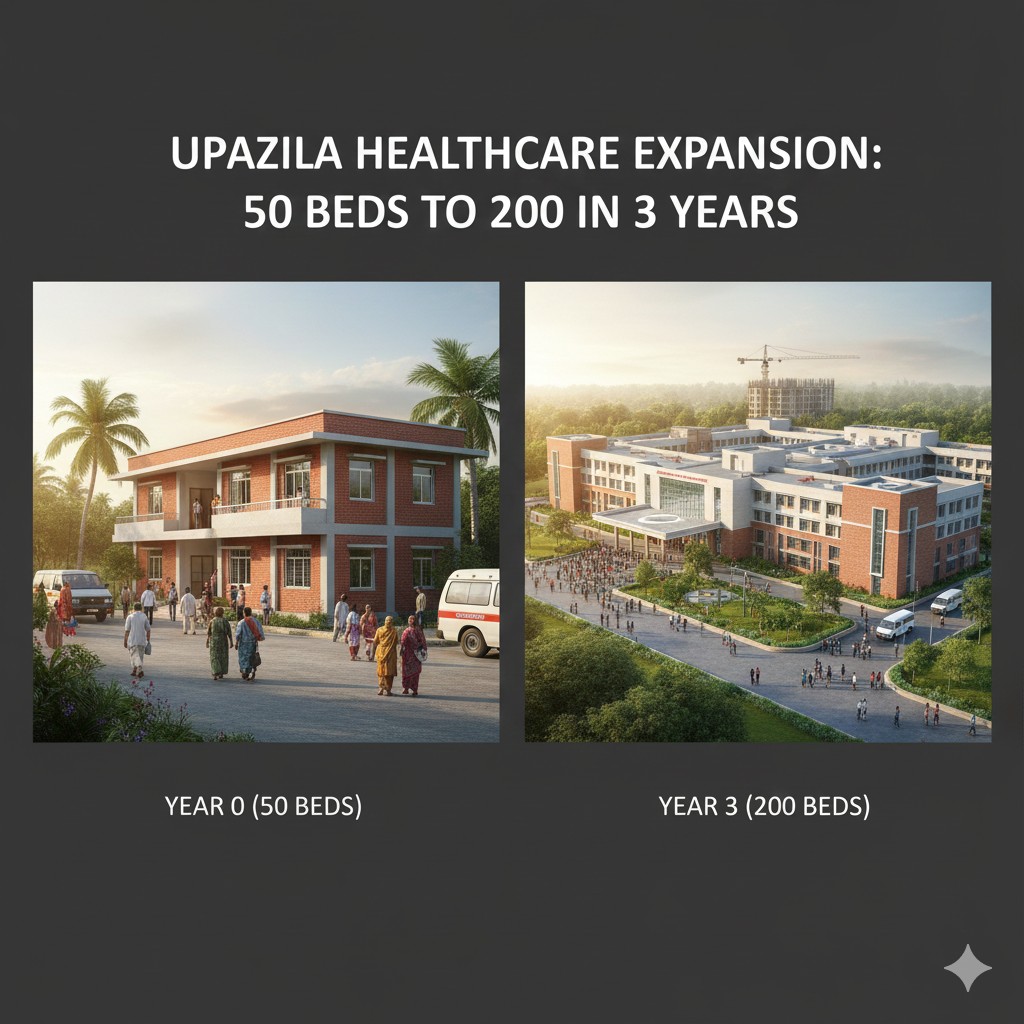
5.1 Pillar One – Strong Upazila Hospitals (50 Beds → 100–200 Beds)

Current Problem

UHCs are not designed to handle serious emergencies, complex deliveries or large patient flows. Equipment is missing or unused. For a population of over 500,000, this means that many of the more than 100,000 under-five deaths and 63,000 stillbirths nationally are linked to late referrals and weak local services like those in Sylhet-3.

New Proposal

  • Upgrade UHCs in Fenchuganj, Dakshin Surma and Balaganj towards 100–200 bed capacity.
  • Establish 24/7 emergency units, with basic life support, oxygen and triage systems.
  • Set up fully functional operating theatres for general and obstetric surgery.
  • Ensure laboratories, X-ray and ultrasound units are modern, staffed and maintained.
  • Create dedicated maternal and newborn corners with neonatal resuscitation equipment.

How It Can Be Done

  • Include UHC expansion in national and local development plans, with ring-fenced budgets.
  • Phase construction: first upgrade emergency and maternity units, then expand bed capacity.
  • Connect UHCs to SOMCH through formal referral protocols and telemedicine for specialist guidance.
  • Introduce maintenance contracts for equipment so machines stay functional and safe.

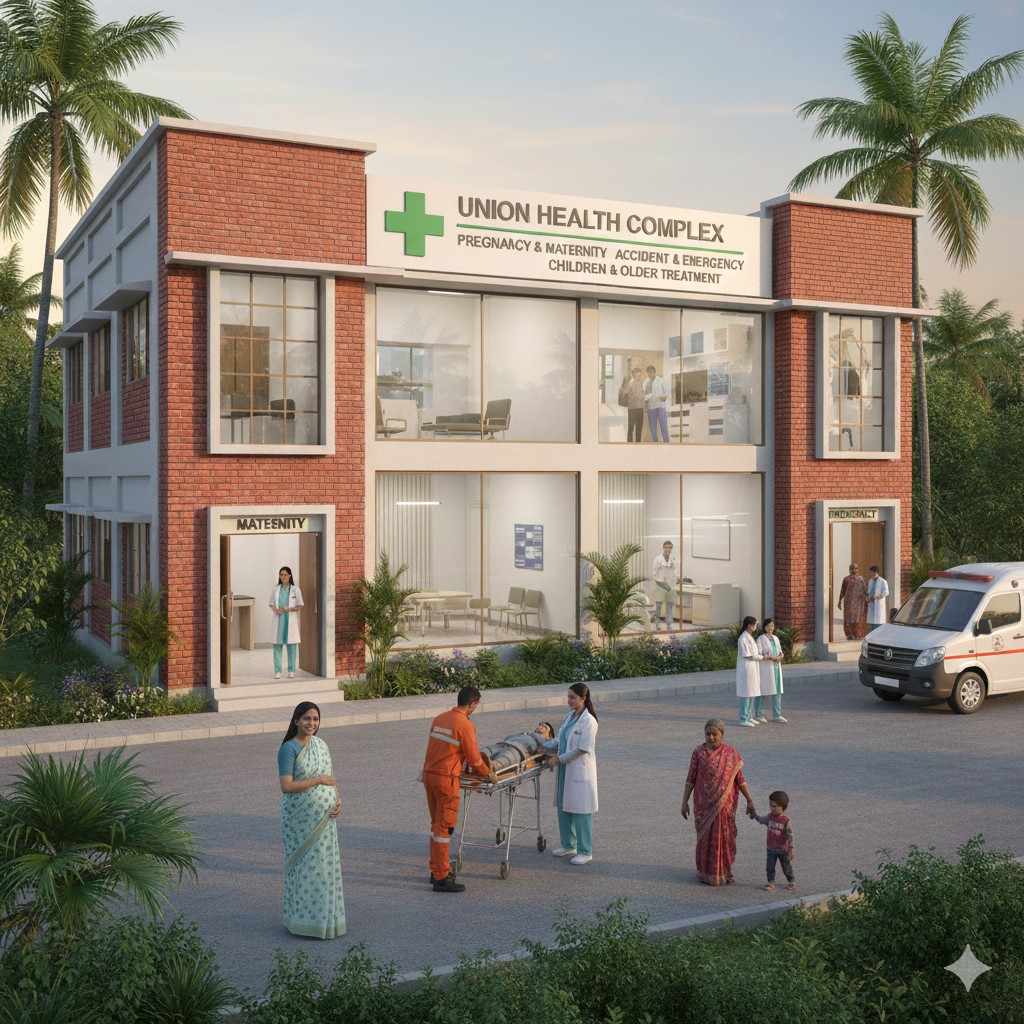
5.2 Pillar Two – Union-Level Health Complexes Close to People

Current Problem

Many villages in Sylhet-3 are several kilometres from the nearest functioning facility. Evidence shows that for every kilometre increase in distance, the risk of neonatal and child death can rise by around 15–20%. Distance literally costs lives for our 144,000+ children.

New Proposal

  • Set up a Union Health Complex in each union of Fenchuganj, Dakshin Surma and Balaganj.
  • Each complex will provide normal delivery services, basic emergency stabilisation and child care.
  • At least 1 MBBS doctor and 2 midwives will be posted per union.
  • Each union will have a reliable ambulance or emergency vehicle linked directly to the Upazila hospital.

How It Can Be Done

  • Upgrade existing Union Sub-Centres or Community Clinics into full Union Health Complexes.
  • Prioritise unions with the worst access and highest maternal/child deaths for the first phase.
  • Use a standard building design to reduce costs and speed up construction.
  • Involve Union Parishad and community leaders in site selection and oversight.

5.3 Pillar Three – Human Resources, Training and Respectful Care

Current Problem

Many posts are empty, and those who are working often feel overwhelmed. Patients complain of long waiting times, lack of information and disrespectful treatment, which discourages them from returning – even when they or their children are very sick.

New Proposal

  • Fill key specialist posts: surgeons, gynecologists, pediatricians, anesthetists, lab technologists.
  • Guarantee at least one doctor and two midwives per union, and sufficient nurses per Upazila.
  • Introduce regular in-service training on emergency care and respectful communication.
  • Create clear duty rosters and patient charters publicly displayed at facilities.

How It Can Be Done

  • Offer rural hardship allowances and housing support for staff posted outside city centres.
  • Use bonded placements for new medical graduates and midwives with fair working conditions.
  • Use digital attendance systems to reduce absenteeism and improve accountability.
  • Set up complaint systems and community health committees to monitor behaviour and quality.

5.4 Pillar Four – Digital, Climate-Smart and Safe Health Facilities

Current Problem

Health facilities in Sylhet-3 are vulnerable to floods, contaminated water and power cuts. Records are mostly on paper, and outbreaks are detected late, costing time and lives.

New Proposal

  • Design UHCs and Union complexes with flood-resistant structures and safe water systems.
  • Introduce simple electronic health records and SMS reminders for vaccinations and follow-up visits.
  • Use telemedicine to connect rural facilities to specialists at SOMCH and Dhaka.
  • Build early-warning systems for disease outbreaks and medicine shortages.

How It Can Be Done

  • Coordinate with water, power and disaster management departments for climate-smart design.
  • Start with low-cost digital tools (tablets, basic software) and expand as staff gain confidence.
  • Train one “digital champion” in each facility to support other staff.
  • Partner with universities, tech companies and NGOs for pilot projects and technical support.

5.5 Pillar Five – Reducing Out-of-Pocket Costs and Protecting Families

Current Problem

Around 67% of all health spending in Bangladesh comes directly from patients’ pockets. A single emergency can push a family in Sylhet-3 into debt for years.

New Proposal

  • Ensure essential medicines are reliably available at UHCs and Union complexes at subsidised rates.
  • Offer key diagnostic tests (blood tests, X-ray, ultrasound) at affordable public rates.
  • Gradually explore community-based health financing or basic insurance models that protect the poorest.

How It Can Be Done

  • Strengthen drug supply chains to avoid frequent stockouts of essential medicines.
  • Publish clear, transparent price lists for services and tests in every facility.
  • Work with national programmes and development partners to pilot low-cost coverage schemes.

6. Step-by-Step Implementation Roadmap

Reform must be realistic and phased. This roadmap offers a simple, practical sequence that government, partners and local leaders can follow to turn this proposal into action.

Phase 1 · 0–2 Years

Stabilise and Prepare

  • Map all existing facilities, staff and service gaps in Sylhet-3.
  • Upgrade emergency and maternity units in existing UHCs.
  • Identify and upgrade 3–5 priority Union facilities into full Union Health Complexes.
  • Start recruitment for critical specialist posts and midwives.
Phase 2 · 3–5 Years

Expand and Integrate

  • Expand UHC bed capacity towards 100–200 beds where patient load is highest.
  • Roll out the Union Health Complex model to all unions in Sylhet-3.
  • Introduce digital records, telemedicine and early-warning systems.
  • Formalise referral protocols between unions, UHCs and SOMCH.
Phase 3 · 5+ Years

Consolidate and Improve Quality

  • Refine services based on data and feedback from patients and staff.
  • Strengthen preventive care for NCDs, mental health and elderly care.
  • Explore sustainable long-term health financing and coverage options.
  • Use Sylhet-3 experience as a model for other Upazilas in Bangladesh.

7. What This Reform Means for Ordinary People

At the heart of this proposal are the daily lives of families in Sylhet-3. If implemented properly, people will notice very clear and practical changes:

Safer Pregnancy and Childbirth

Skilled midwives and doctors nearby will mean that women can give birth safely without last-minute, risky journeys to Sylhet city. Fewer emergency C-sections, fewer stillbirths, fewer mothers lost.

Faster, Fairer Emergency Care

Heart attacks, strokes, accidents and childhood illnesses will be treated quickly at union and Upazila level, not only when it is too late at a crowded city hospital.

Less Financial Pressure

With stronger public services, families will depend less on expensive private clinics. Healthcare will no longer be one of the main reasons why a family falls into long-term debt.

8. Data Sources Behind the Numbers

The statistics used on this page are drawn from a mix of national and international sources. They will be updated as new data becomes available.

Key Sources

National data: Population figures and demographics for Dakshin Surma, Fenchuganj and Balaganj are based on the latest available official statistics for 2022.

Global health estimates: Numbers on child deaths, stillbirths and maternal mortality come from international organisations such as UNICEF, WHO, UNFPA and the UN Inter-Agency Group for Child Mortality Estimation (UN IGME).

Health spending and access: Figures on out-of-pocket health spending and government investment are based on national health accounts and World Bank/WHO analyses.

Distance and mortality: The finding that child death risk increases by around 15–20% per additional kilometre to a health facility is based on published research on rural health access in countries like Bangladesh.

These sources are used to give a clear, honest picture of the scale of the challenge. They do not replace detailed local surveys, but they help us understand why Sylhet-3 urgently needs a stronger, fairer healthcare system.

Healthcare Reform Needs All of Us

This proposal is a starting point, not the final word. It will only work if health professionals, government, local leaders and ordinary citizens push together for change. Your voice, your story and your ideas matter.